Cabinet refacing materials: compare durability and cost
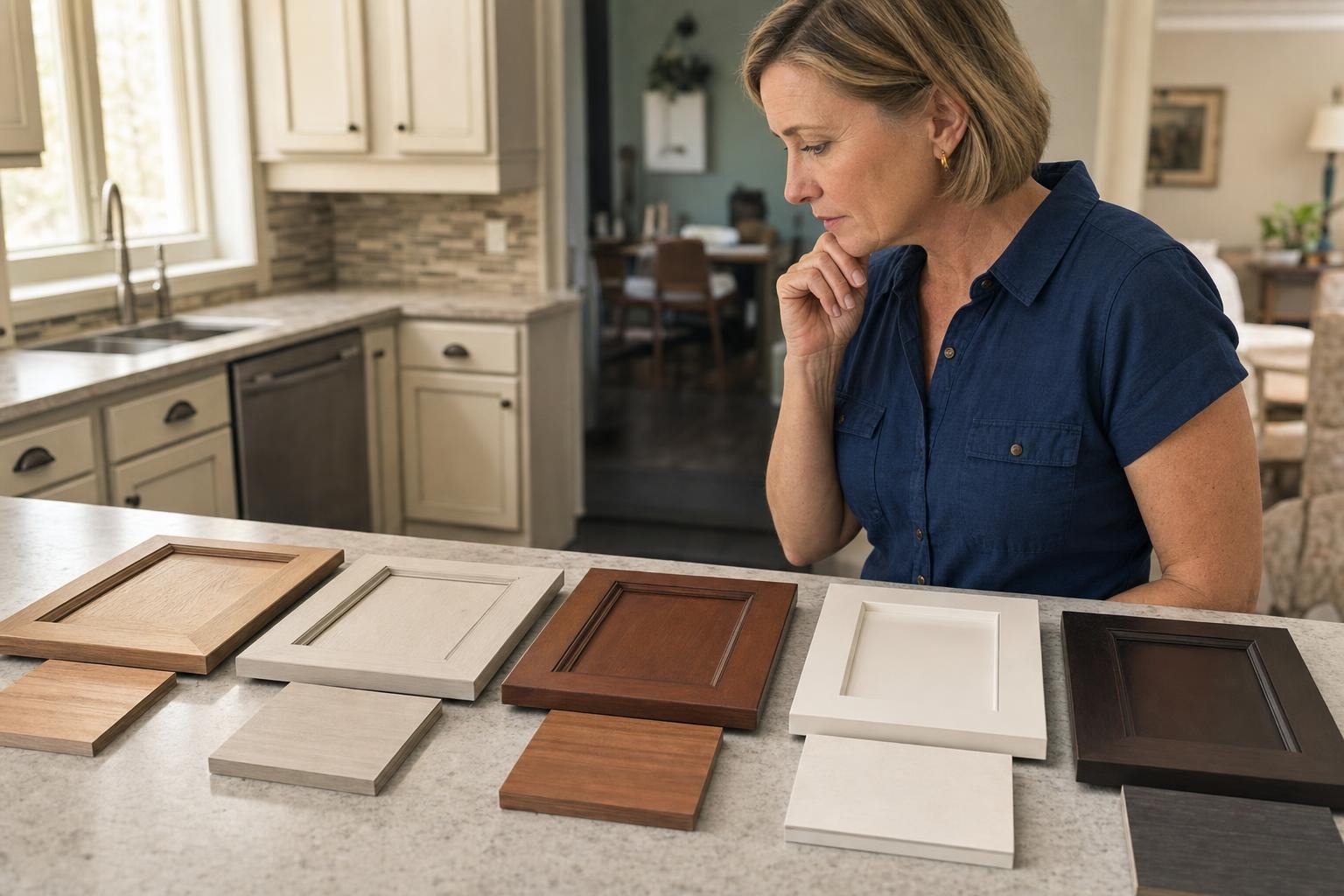
When homeowners ask “what should I choose?” the phrase cabinet refacing materials frames the decision: visible surface options affect durability, moisture tolerance, how repairs are handled, and what you can expect for future refinishing. This article compares the common choices, gives a materials‑use matrix, and supplies practical troubleshooting and maintenance steps contractors use when veneer or film fails to bond or peels.
Quick summary of available visible-surface options
Refacing replaces visible cabinet surfaces—doors, drawer fronts, and exposed end panels—while leaving the original box carcasses. Common visible‑surface materials are: wood veneer, rigid thermofoil (RTF), laminate (including low‑pressure laminate), painted MDF doors (factory painted), and solid‑wood doors. Each is a tradeoff between appearance, durability, susceptibility to moisture, and long‑term serviceability. Which one is best depends on your kitchen conditions (humidity, proximity to stovetop), how long you want the finish to last, and whether you expect to refinish the surfaces later.
cabinet refacing materials
This section shows the material attributes you’ll see in contractor conversations. The following matrix summarizes relative performance across five attributes: durability (wear and impact), moisture tolerance, repairability (how easy it is to repair chips/peel), finish options, and likely price band. “Price band” is expressed as low / mid / high to compare options rather than exact costs, which vary by location and vendor.
Materials matrix: veneer, thermofoil, laminate, painted MDF, solid wood
Veneer — Durability: mid. Thin real wood sheets over substrate give a natural look but can delaminate if moisture or glue failure occurs. Moisture tolerance: mid‑low; edge sealing is critical. Repairability: moderate; small chips can be patched and stained but full replacement of a door may be simpler. Finish options: wide (stains, clear coats). Price band: mid.
Rigid thermofoil (RTF) — Durability: low‑mid. A heat‑formed vinyl film on MDF or engineered substrate gives a seamless look and is easy to clean but is prone to peeling, especially at edges and where heat is concentrated. Moisture tolerance: low at seams/edges; continuous film is fairly waterproof on flat surfaces. Repairability: low; peeled film is usually replaced rather than repaired. Finish options: limited (solid colors, some woodgrains). Price band: low.
Laminate — Durability: mid. Decorative laminate on plywood or MDF resists scratches and stains but is visible at seams and edges if edge banding is thin. Moisture tolerance: mid; properly glued laminate resists moisture but edges remain vulnerable. Repairability: moderate; chips at edges can be replaced or re‑edged. Finish options: many patterns and textures. Price band: low‑mid.
Painted MDF doors — Durability: mid. Factory‑painted MDF gives a smooth, modern finish when properly primed and baked. Moisture tolerance: mid‑low; MDF swells if exposed to standing water or prolonged humidity, but sealed paint helps. Repairability: good for surface scratches and chips; painted panels can be sanded and repainted. Finish options: excellent (any paint color, specialty finishes). Price band: mid.
Solid wood doors — Durability: high. Solid wood is the most resilient to wear and can be sanded and refinished multiple times. Moisture tolerance: highest when using appropriate species and finishes; still sensitive to extreme humidity shifts. Repairability: high; dents and scratches can be repaired and whole doors refinished. Finish options: wide (stain, paint, lacquer). Price band: high.
When to choose veneer vs thermofoil vs solid wood (use‑case rules)
Rules of thumb help match material to use case. Choose veneer when you want a natural wood look at a lower cost than solid wood and are prepared to seal edges. Choose rigid thermofoil for budget projects where you want smooth, wipeable surfaces and will avoid steam exposure and high heat near the film. Choose laminate when you want many pattern options and hard‑wearing, stain‑resistant surfaces. Choose painted MDF where crisp painted profiles and custom colors are important and you can avoid prolonged water exposure. Choose solid wood when durability and ability to refinish repeatedly are priorities and your budget allows it.
Consider kitchen layout: islands and open‑plan areas benefit from solid wood or painted finishes that can be repaired; dishwasher, sink runs, and range surrounds are higher‑moisture/heat zones where properly sealed veneer or solid wood perform better than thin thermofoil. If box condition is poor (soft or swollen substrate), refacing visible surfaces is not recommended regardless of material.
Partial‑refacing matching issues and when you cannot match finishes
Matching a new refaced section to existing cabinetry often fails because of aging, sun exposure, and material differences. Veneer and solid wood change tone and patina over time; thermofoil and laminate sheets have manufacturing color batches and surface texture variation; painted panels may not match sheen or subtle color shifts. If only part of the kitchen is refaced, expect visible transitions unless the entire visible run (including exposed ends and appliance panels) is updated. Best practices: sample an actual door from your batch in the installation lighting, accept that perfect match is unlikely when mixing materials, and consider repainting or fully refacing adjacent sections to avoid patchy results.
Installation failure modes and troubleshooting steps for each material (peel, edge lift, seam gaps)
Below are common failure modes for each material and the pragmatic, stepwise troubleshooting sequences installers use when adhesives or films fail. These are diagnostic and repair steps contractors commonly follow; depending on severity they may recommend replacing affected pieces rather than spot repairs.
Veneer — common failures and contractor troubleshooting
Common failures: edge lift or bubbling where glue bond failed; seam separation at miters; finish cracking where substrate moves. Troubleshooting sequence: 1) Identify and document all delaminated areas. 2) Carefully remove loose veneer back to a stable edge. 3) Clean substrate of old adhesive and moisture. 4) Use an appropriate wood veneer adhesive (hot‑melt or urea‑formaldehyde for shop work; PVA adhesives for on‑site non‑structural joins) and clamp or vacuum‑press until cured. 5) Re‑trim and re‑finish edges with edge banding or sealant and recoat finishes. If the substrate is swollen, replace the door or repair substrate first.
Rigid thermofoil (RTF) — common failures and contractor troubleshooting
Common failures: peeling at edges or around heat sources, bubbling from trapped moisture, seam cracking. Troubleshooting sequence: 1) Document and photograph peeling and note proximity to heat/steam. 2) Test bond by gently lifting film in a small area; if film is intact, clean surface with solvent recommended by the film manufacturer. 3) Rebond small areas with a compatible contact adhesive and clamp or use edge heat and roller technique per manufacturer's instructions. 4) Replace full door or panel if large areas have lost adhesion—spot rebonding is often short‑lived. 5) Address root cause: improve edge sealing, add heat shields near ovens, or reroute steam sources.
Laminate — common failures and contractor troubleshooting
Common failures: edge delamination, seam gaps where edge banding has failed, surface chips. Troubleshooting sequence: 1) Inspect edges and seams; remove failed edge banding. 2) Clean surfaces and sand mating surfaces if needed. 3) Apply a high‑strength contact adhesive recommended for laminate; clamp and allow specified cure time. 4) Replace or reapply PVC edge banding using hot‑melt or preglued edges, trim, and finish. 5) Replace panels when underlying substrate is compromised.
Painted MDF — common failures and contractor troubleshooting
Common failures: paint cracking at joints, swelling from water exposure, edge breakdown. Troubleshooting sequence: 1) Confirm whether damage is surface paint or swollen substrate by tapping and probing. 2) For surface defects, sand feather the area, prime properly with a high‑adhesion primer, and repaint using manufacturer's paint system. 3) If MDF is swollen, replace the affected panel/door and improve sealing and ventilation. 4) Ensure factory or shop edges were sealed to prevent future moisture penetration.
Solid wood — common failures and contractor troubleshooting
Common failures: cracking or movement from humidity swings, surface dents, finish wear. Troubleshooting sequence: 1) Determine whether the issue is finish or wood movement. 2) For finish wear, sand and refinish the door in shop conditions. 3) For joint separations, reglue with wood glue and clamp; where boards have cupped or warped, replace or plane in shop. 4) Advise homeowners on humidity control to prevent repeat movement.
Maintenance checklist and expected lifespan per material
General maintenance steps: avoid abrasive cleaners; wipe spills promptly; use protective pads for hot pans and appliances; keep humidity in a moderate range; and inspect seams and edges annually. Expected relative lifespans: thermofoil and laminate typically show wear earlier than veneer or painted finishes; solid wood has the longest service life and greatest ability to be refinished. Actual lifespan depends heavily on traffic, moisture exposure, and installation quality.
How material choice affects later refinishing or resale options
If you plan to resurface again or want resale flexibility, choose materials that can be refinished. Solid wood and painted MDF doors can be sanded and refinished or repainted; veneer can be stained or clear‑coated but has limits; thermofoil and many laminates cannot be refinished and must be replaced. For resale, higher‑quality visible materials and consistent, professionally executed finishes generally appeal to buyers more than low‑cost films, but market preferences vary.
Questions to add to contractor bids about adhesive, edge banding, and substrate prep
Include explicit items in contractor bids to avoid surprises: 1) What adhesive type will be used for the chosen material and is it compatible with the substrate? 2) How will edges and exposed ends be finished and sealed—PVC edge banding, solid wood banding, or sealed veneer edges? 3) Will the contractor use shop‑pressed doors or field‑applied film/veneer? 4) How will the substrate be inspected and repaired, and is any allowance included for box repairs? 5) Are hardware changes (hinges, soft‑close) included? 6) What warranty covers bond failure, peeling, and color matching? 7) Will ventilation or heat mitigation near ranges/dishwashers be addressed if it affects film performance? Asking these clarifying questions reduces change orders and clarifies responsibility if failures occur.
Installation-failure preventative steps contractors commonly recommend
Preventative measures reduce the likelihood of failures: proper substrate preparation (clean, flat, dry, mechanically sound); using adhesives specified by the material manufacturer; clamping or vacuum‑pressing veneer in a controlled environment; sealing all edges and cutouts; allowing appropriate cure times before reinstalling hardware; and isolating heat sources from thermofoil. A well‑written contract will list materials, adhesive types or standards, and tolerance for box condition to prevent disputes.
Next steps for homeowners considering refacing
Before getting quotes: photograph cabinet interiors and exteriors, note any soft or swollen areas, and list doors/drawers to be replaced or left. Ask contractors to provide material samples and, if possible, a mockup panel in your kitchen light. Include the bid questions above and budget a contingency for unseen box repairs or partial‑match issues. For cost planning and timing, consult reputable cost guides and compare multiple bids to understand included scope and exclusions.