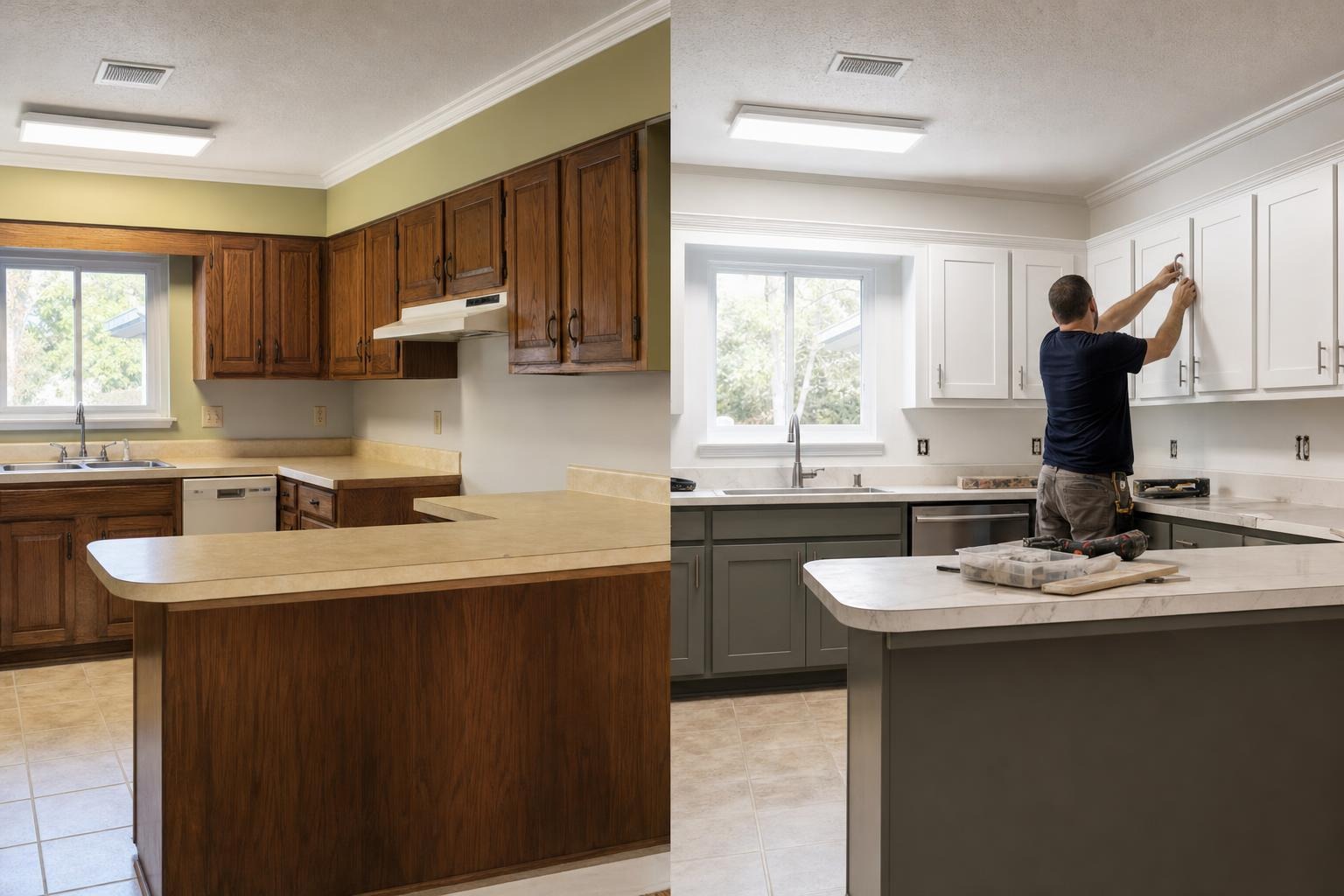
Requesting cabinet refacing in Bay County: how to start
Start the process by gathering basic information about your kitchen or built-in cabinets and then submitting a clear request to prospective contractors or independent refacing specialists. A complete request speeds up estimates and avoids unnecessary site visits. Include square footage or a cabinet count, current finish types (painted, stained, laminate), and any planned layout changes. If you have inspirational photos or a pinned finish, attach them to show the desired look. Expect contractors to follow up with clarifying questions and to ask for photos or a short video tour to confirm dimensions and condition.
Define the scope
Decide whether you want a cosmetic refacing (doors and veneers only) or a more extensive update that includes new hardware, drawer boxes, or modest layout changes. Cosmetic refacing preserves the cabinet carcasses and is typically faster than full replacement, but it requires the existing boxes to be in good condition. Make a prioritized list of must-haves and nice-to-haves so each bid can map to the same scope.
Materials and finishes to specify
Specify door style (flat, Shaker, raised panel), veneer type (wood, thermofoil, laminate), and finish (stain, paint, lacquer). If budget is a concern, ask for an option matrix showing costs for common materials. Confirm whether new hardware, soft-close hinges, or trim pieces are included or quoted separately.
Scheduling questions contractors will ask (and you should ask them)
Scheduling a refacing job means coordinating access, deliveries, and time on site. Contractors will ask about preferred start dates, homeowner availability, and whether the project should be phased to keep parts of the kitchen usable. Prepare a list of constraints—workdays you cannot accommodate, pets, or events—and share them early in scheduling conversations. Also ask contractors how many days they expect the job will take, what intervals require homeowner decisions, and how change orders are handled.
Timeline expectations
Typical cabinet refacing projects have predictable stages: measurement and templating, fabrication or ordering of doors and veneers, and on-site installation. Request a written timeline with milestones and a window for deliveries. Ask whether inclement weather, lead times for custom finishes, or material backorders could affect the schedule and what contingency options exist.
Access and working hours
Clarify daily working hours, parking and loading needs, and whether the contractor requires uninterrupted access for multi-day stretches. If you live in a multi-unit building or have strict noise rules, disclose rules in advance so the contractor can schedule quieter tasks appropriately.
Preparing your home before cabinet refacing begins
Good preparation reduces delays and protects your belongings. Clear countertops, remove perishable food from affected areas, and empty drawers and cabinets to be worked on. If appliances must be moved or disconnected, confirm who handles that and whether the contractor will coordinate licensed trades for gas or electrical work. Protect adjacent floors and furniture with runners and drop cloths, and ensure a clear path for material deliveries.
Worksite protection and safety
Ask the contractor about dust-control measures such as zip walls, HEPA vacuums, and daily cleanup. Agree on a rule for where workers will take breaks and store tools so that personal spaces remain private. If you have small children or pets, arrange a safe, separate area during active work hours.
Appliances and fixtures
Confirm responsibility for temporarily removing or reconnecting appliances. Some refacing work can be done around fixed appliances, while some configurations require temporary removal. Clarify whether small appliance relocation or sink disconnection will be included, and schedule any plumber or electrician visits in advance.
Communication and decision points during cabinet refacing
Clear, documented communication prevents misunderstandings. Request a single contact person for daily updates and prefer written confirmations for scope changes. Expect decisions about color matching, hardware placement, and minor adjustments once doors arrive. Set checkpoints for mock-ups or samples—especially for stained finishes—so final approval happens before full installation.
Handling changes and approvals
Establish a simple change-order process that records what changed, why, and the cost or schedule impact. Insist on written approval before fabrication begins for custom items. For color-sensitive choices, ask for physical samples rather than relying on digital photos.
Completion checks, warranties, and keeping records
Before final payment, walk the job with the contractor and inspect door alignment, hardware function, finishes, and cleanup. Create a punch list of any remaining items and agree on deadlines for completion. Collect invoices, material warranties, and care instructions for the new surfaces. Keeping a file with receipts and warranty information simplifies future maintenance or any warranty claims.
Final walkthrough checklist
Verify that all doors and drawers open smoothly, that finishes are uniform, and that replacement trim and toe-kicks are secure. Check that adjacent surfaces and flooring were protected and restored. Confirm that jobsite debris was removed and request a brief written summary of completed work and any remaining items.
Website and request information
Cabinet & Cupboard RefacingRequests may be submitted for Bay County, FL