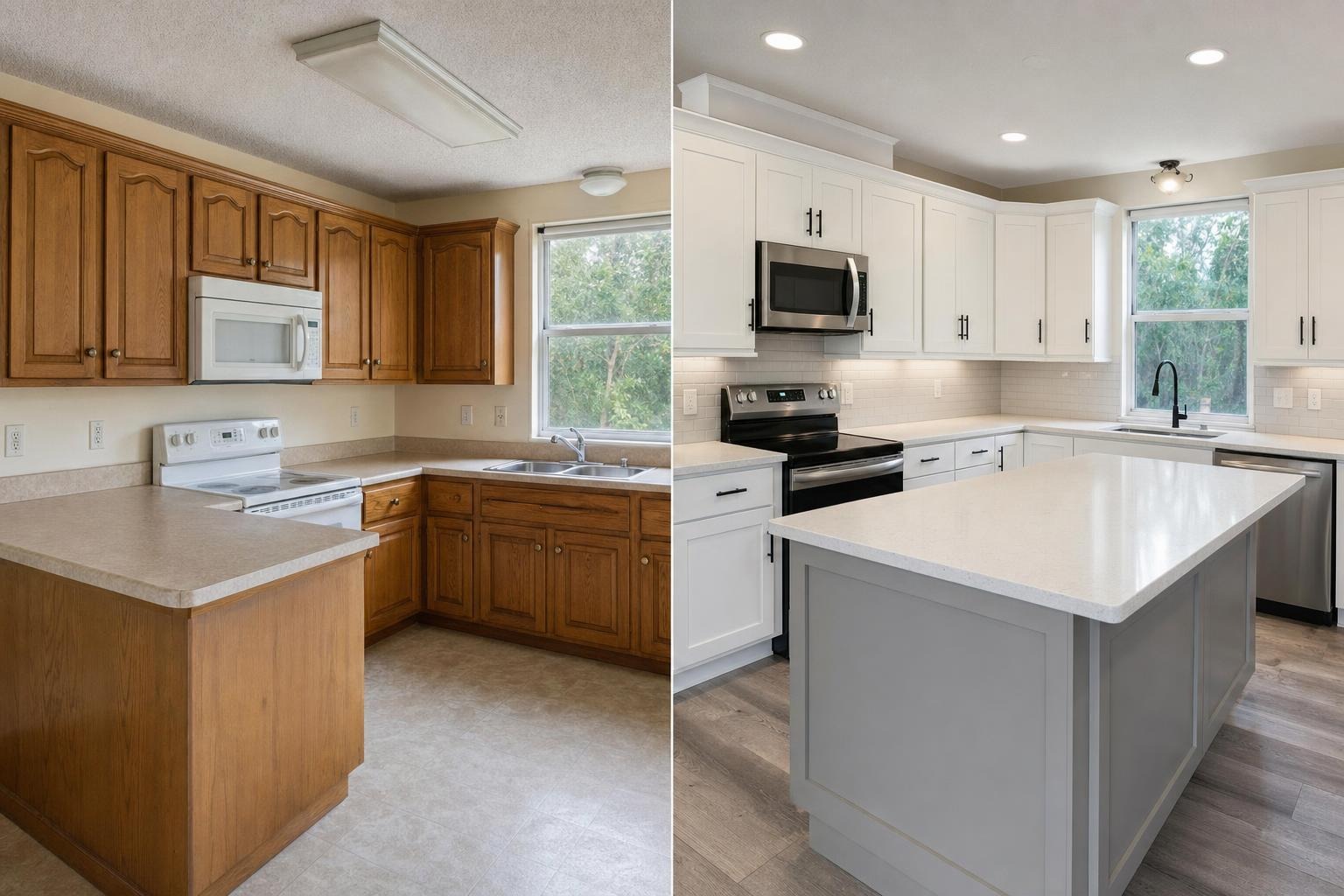
How cabinet refacing works and what to expect
Cabinet refacing replaces visible cabinet surfaces — doors, drawer fronts, and veneers — while reusing the existing frames. A typical project starts with an on-site assessment to confirm that the existing carcasses are square and structurally sound; warped or water-damaged cabinets often need repair or replacement rather than refacing. After measurement and material selection, technicians remove doors and hardware, fit new veneers or laminate skins to the faces, install new doors and drawer fronts, and refit hardware and trim. Most jobs are daytime interior work: expect dust controls, floor protection, and a multi-step finish and curing period. Ask contractors for a clear written scope that lists exclusions (electrical, plumbing, full structural repairs) and a timeline with contingency for hidden substrate issues.
Materials and finish choices
Choose materials by balancing look, durability, and moisture resistance. Thermofoil and high-pressure laminates offer smooth, low-maintenance surfaces; engineered veneers and hardwood provide a higher-end look but need sealed edges. For painted refacing, insist on primers and topcoats formulated for cabinetry to resist chipping and humidity. Hardware selection (hinges, drawer slides) should include corrosion-resistant finishes if the home is exposed to coastal air or higher humidity.
Typical timeline and disruption
A standard kitchen refacing project can take from a few days to a week depending on size, custom work, and finish curing. Bathrooms and smaller kitchens often finish faster. Expect technicians to work in phases: removal, substrate prep, application, and finishing. Plan for limited kitchen use and set up a temporary food prep area to reduce stress during the work.
Permits, codes, and when to contact the county about cabinet refacing
Many refacing projects are interior finish work, but permit requirements depend on the scope: alterations that affect structural members, electrical systems, or plumbing commonly trigger building permits and inspections. If work takes place in areas subject to development controls (for example, floodplain areas or designated development zones), additional approvals could be required. Before hiring a contractor, ask whether the planned work will require permits or inspections and where the contractor files them. For county-specific adopted codes and permit authority, see the proof modules titled “Local codes and permit authority” and “Flood, storm planning, and floodplain permits.”
Questions to ask your contractor
Request a written list of permit assumptions, the contractor’s plan for filing and inspection scheduling, and a statement of responsibility for code compliance. If the job requires cutting into walls, moving wiring, or rerouting plumbing, confirm who will pull the appropriate trade permits and obtain approvals before work begins.
Durability, maintenance, and hurricane-season planning for cabinet refacing
Exterior weather and seasonal storms can indirectly affect interior cabinetry through elevated humidity, roof or window leaks during storms, or flood events in low-lying properties. To improve longevity, specify sealed edges, water-tolerant adhesives, and finishes that resist moisture. Regular maintenance — wiping spills promptly, controlling indoor humidity, and treating corrosion on hardware — extends life. For coastal or storm-vulnerable properties, store spare door panels and hardware in a dry place and confirm contractors use rust-resistant fasteners and hardware. If you have concerns about flood risk or storm planning for your property, consult the county’s flood-information resources before beginning work (see evidence modules).
Warranty, contracts, and long-term care
Get warranty terms in writing and understand what they cover: finish failure, adhesive bond, hinge function, and installation defects. Contractors should provide care instructions tailored to the finish used, including recommended cleaning agents and humidity-range precautions.
Local planning considerations
Local codes and permit authority
Okaloosa County lists the 2023 Florida Building Code, 8th Edition; 2023 Florida Plumbing Code, 8th Edition; 2023 Florida Mechanical Code, 8th Edition; and 2020 NFPA 70 National Electrical Code as adopted building codes. For unincorporated Okaloosa County, the Department of Growth Management Building Division processes building-permit-related applications through its online portal.
Flood, storm planning, and floodplain permits
Okaloosa County storm planning is subject to the Atlantic hurricane season, which NOAA defines as June 1 through November 30. The county's flood-information service maps FEMA FIRM flood zones, including A, AE, VE, X, and 0.2-percent-annual-chance flood-hazard areas. Okaloosa County states that all development, not only construction, within the county floodplain requires permits and directs applicants to the Department of Growth Management.
Historic and archaeological resource protections
Okaloosa County’s future land-use policy calls for designated historic and archaeological resources and districts to be protected through identification, classification, and development regulation.
Frequently asked questions
Sources for local information
Use these sources to confirm current local requirements and conditions for the property involved.
- Building permit authority unincorporated — myokaloosa.com — For unincorporated Okaloosa County, Okaloosa County government provides local services, and the Department of Growth Management Building Division processes building-permit-relat… (local source)
- Atlantic hurricane season — aoml.noaa.gov — Okaloosa County storm planning is subject to the Atlantic hurricane season, which NOAA defines as June 1 through November 30. (local source)
- Floodplain development permits — myokaloosa.com — Okaloosa County states that all development, not only construction, within the county floodplain requires permits and directs applicants to the Department of Growth Management. (local source)
- Hazard.county fema firm flood zone coverage — myokaloosa.com — Okaloosa County's flood-information service maps FEMA FIRM flood zones, including A, AE, VE, X, and 0.2-percent-annual-chance flood-hazard areas. (local source)
- Historic archaeological resource protection policy — gis.myokaloosa.com — Okaloosa County’s future land-use policy calls for designated historic and archaeological resources and districts to be protected through identification, classification, and dev… (local source)
Website and request information
Cabinet & Cupboard RefacingRequests may be submitted for Okaloosa County, FL